
01 / A FUNCTIONAL MATERIAL
Gold’s Engineering Value.
Gold combines good electrical conductivity, resistance to tarnishing and the ability to be formed into very fine wire or thin coatings. Engineers can use those properties in selected electronic connections where long-term surface stability matters.
The right material still depends on the design. Gold is not the most electrically conductive metal, and copper, silver, aluminum and other materials also serve important roles. Cost, reliability, compatibility and process requirements shape the final choice.
Sources: World Gold Council: gold and the electronics sector and TANAKA: bonding-wire products and material properties.
02 / PRECISION INTERCONNECTION
What Gold Bonding Wire Does.
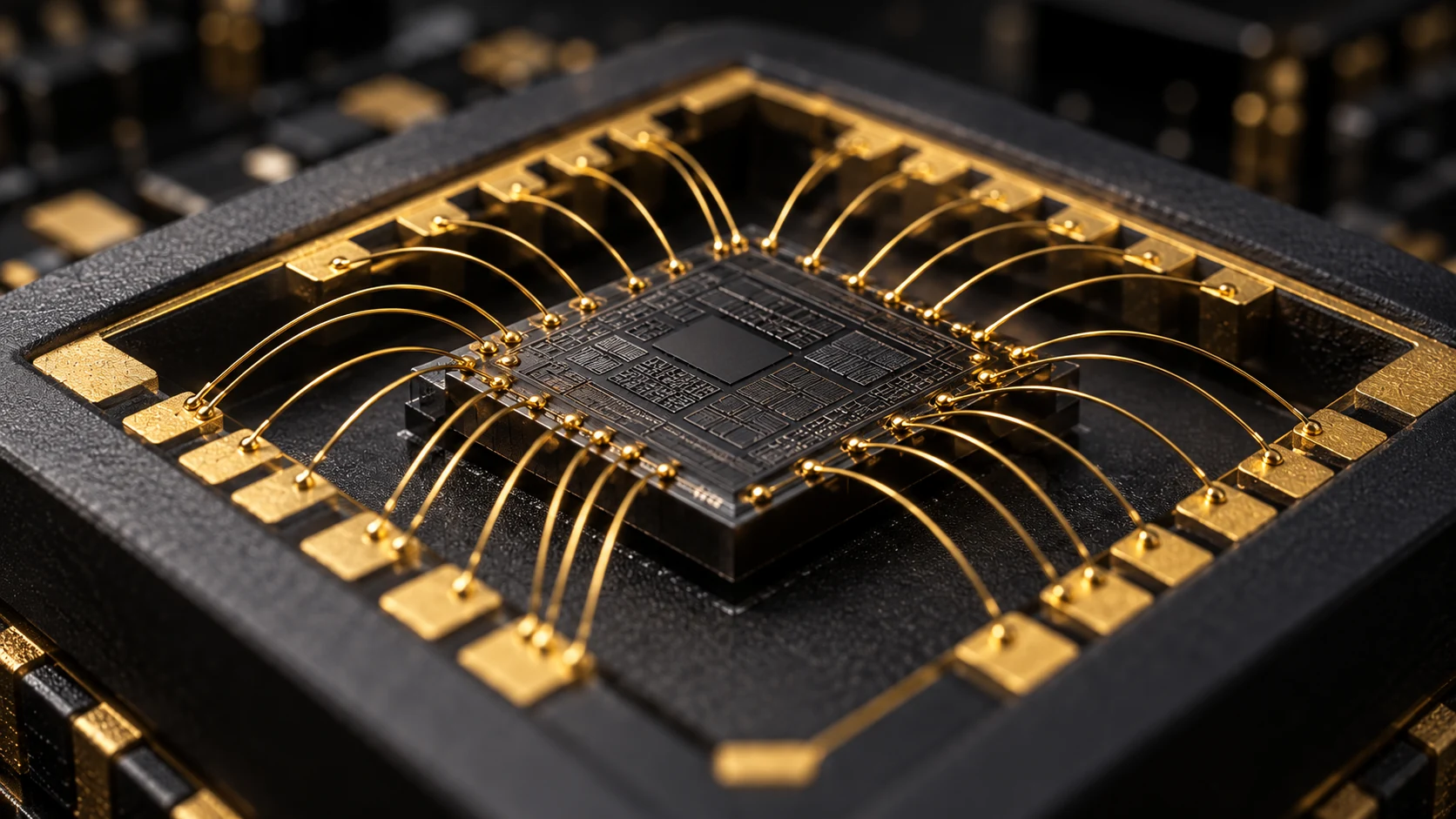
Bonding wires make electrical connections between a semiconductor chip and its external circuitry or package. Gold and gold-alloy wires are among the materials used for this purpose. A finished wire is a precision product: diameter, mechanical behavior, alloy composition, surface condition and compatibility with the bonding process all matter.
A bullion bar is a potential material input for a processor. The processor may need further refining, controlled alloying, wire drawing, heat treatment and testing before the metal becomes a qualified wire product. A bullion purity mark alone does not establish the performance of finished bonding wire.
Reference: TANAKA’s overview of bonding-wire materials and applications. Gold Express USA’s inquiry service concerns bullion; finished-wire specifications and fabrication services must be discussed with the relevant manufacturer.
03 / MODERN COMPUTING
Gold In AI And Data Infrastructure.
Data-center systems rely on semiconductors and fine interconnects. AMETEK identifies gold bonding wire as a material used in AI data-center applications for reliable fine-pitch connections and stable high-frequency performance.
These are component-level material choices. A complete system also uses other metals, optical connections and many types of packaging. The gold requirement is determined by the component manufacturer’s design and approved process, rather than by a generic “data-center gold” specification.
For a wire maker or component supplier sourcing bullion, a useful inquiry identifies the manufacturing step, the required purity and impurity limits, the approved producer requirements and the lot acceptance procedure.
Primary industry reference: AMETEK: AI data centers and specialty materials. This describes industry applications and does not imply an AMETEK relationship or approval.
04 / SURFACE PERFORMANCE
Contacts, Connectors And Coatings.
Gold is also used on selected electrical contact surfaces. Its resistance to tarnishing helps maintain a stable conductive surface. The specific finish can depend on coating thickness, underlying layers, alloy composition, contact design and service conditions.
A fabricator may convert qualified gold material into a contact alloy, a coating input or another intermediate form. These are specialized processing steps. Ask the processor to define the required input specification and acceptance evidence before sourcing bullion.
Industry context: World Gold Council: connector coatings, contacts and gold bonding wire.
05 / THE MATERIAL PATH
From Bullion To An Engineered Part.
- 01 / SOURCEBullion
Identify the lot, producer, weight, fineness and supporting assay.
- 02 / QUALIFYMaterial preparation
Processor acceptance, refining or alloying as the application requires.
- 03 / FABRICATEWire or intermediate
Controlled forming, surface preparation and product testing.
- 04 / VALIDATEQualified component
Manufacturer validation against the device and production process.
The path varies by application. Confirm who performs each stage, who owns the metal during processing, and how yield, scrap and rejected material are handled.
06 / PROCUREMENT THAT STARTS WITH THE PROCESS
What An Industrial RFQ Should Include.
| Requirement | Details to provide |
|---|---|
| Application | Wire fabrication, component manufacturing, refining, contact materials or another specified process. |
| Composition | Required gold fineness, permitted impurities and any application-specific limits. |
| Input form | Acceptable bullion form, individual bar weights and any processor restrictions. |
| Lot qualification | Assay method, certificate requirements, sampling, independent testing and acceptance criteria. |
| Traceability | Named refinery, lot or bar identifiers, origin documentation and chain-of-custody requirements. |
| Supply schedule | Initial quantity, expected consumption, release schedule and receiving location. |
| Commercial basis | Fine-weight pricing, reference time, processing responsibilities, verification and delivery costs. |
99.9% bullion is not a universal industrial grade.
We source our offered 99.9% bullion from an LBMA Good Delivery listed refiner. Refiner accreditation is separate from qualification for your manufacturing process. Your process may require another purity, tighter impurity limits or further refining. Availability and suitability must be confirmed against the manufacturer’s actual specification.Gold Express USA welcomes bullion inquiries from fabricators, industrial buyers and their purchasing teams. Include the technical requirements with your RFQ so the sales conversation starts with the material your process needs.
Discuss an industrial requirement ↗Download the industrial RFQ template ↓
For pricing, documentation and custody fundamentals, continue to the gold bullion buyer’s guide.